

Thought on Design #2. Efficiency or aesthetics (function or form)? Why not both-Part 2
How to eliminate false opposites: from «form follows function» to «form IS function».

Hi and welcome to the second part of my first Letter,
if you have missed the first part, you can find it down here.
I’m Nicholas, architect and founder of Parallel Atelier,
Again this morning, as I write this letter, the sun is shining outside the window in front of me, and it’s still pleasant.
Today I woke up in a different mood, so in the background I have “So long, Frank Lloyd Wright” by Simon & Garfunkel, which is perfect for what I’m going to talk about today.
But let’s get back to it. I left you in the last letter with many open questions, and I promised you answers.
Today we will come full circle.
We will see:
who invented the “pendulum”.
The “fourth horseman” and why he can help us dismantle the pendulum (do you remember the spoiler about the spoon from The Matrix?).
We will update our horseman’s vision to 2025.
Starting from here, we will draw our conclusions on this struggle between form and function and gain a new perspective on the world.
Are you eager? I imagine so, so let’s start right away.
Before we start, consider subscribing below if you’re enjoying these Letters.
3-Louis Sullivan and the «Chinese Whisper»
“Form ever follows function”
-Louis Sullivan, “The Tall Office Building Artistically Considered”, 1896
As I told you last time, in 1925, “form follows function” had been around for about 30 years, so I have to take you even further back, to the last years of the 1800s!
Let’s rewind the film and go back to the beginning of our journey.
We are in the USA, and the scene around us is more or less what we saw in Europe at the beginning of the 20th century.
Here, they are starting to experiment with tall office buildings (skyscrapers), thanks to the advent of the elevator and steel.
Here too, they begin to battle against architectural orders, considered too “European”, in search of an American architecture.
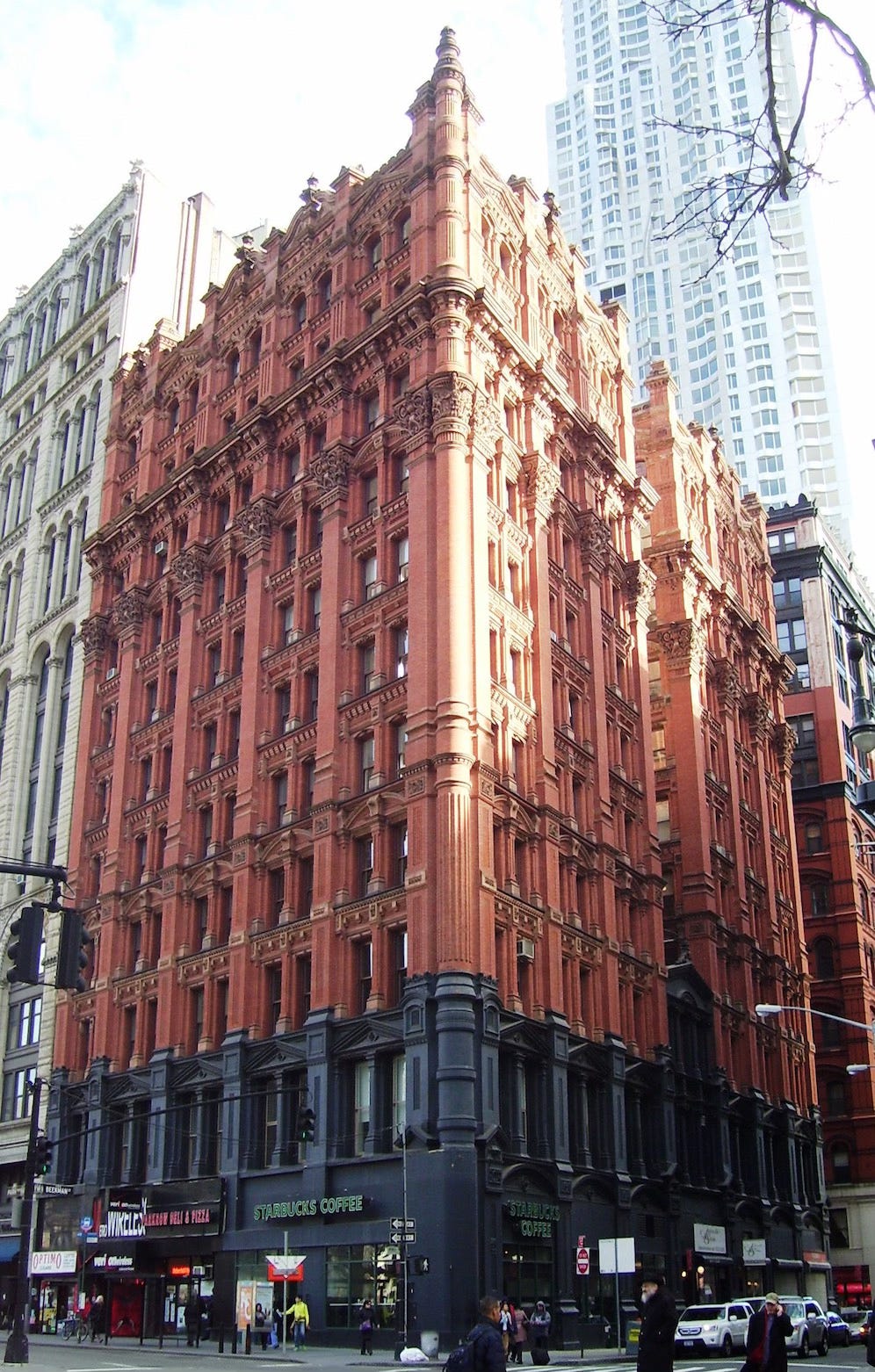
In these early attempts, however, when it comes to building office skyscrapers, floors are “stacked” one on top of the other, and then from the outside, “orders” are applied every 3-4 floors to make these very tall things more “familiar”.
(Essentially, form and function are completely disconnected and separate, each going its own way regardless of the other.)
To give you an idea, I’ve attached a photo of the Potter Building in Manhattan, New York, from 1886, one of the first attempts at an office “skyscraper”.
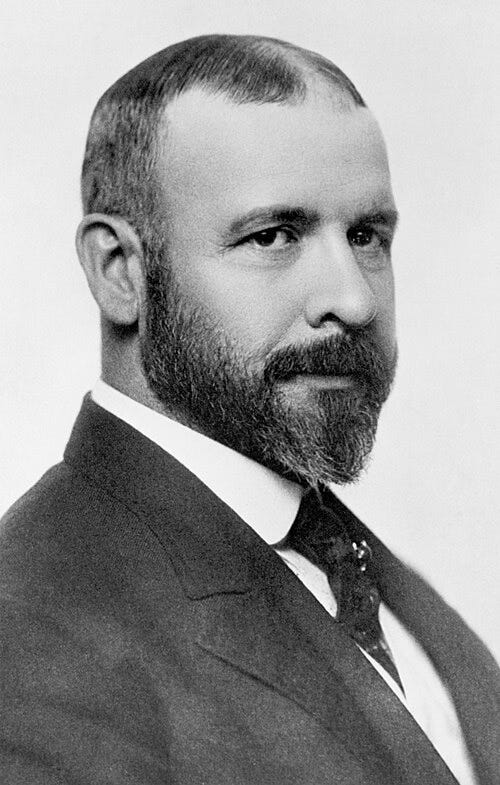
Well, now that we understand each other, let’s go to St. Louis (near Chicago) in 1891, where Louis Sullivan (1856-1924) together with the engineer Dankmar Adler (1844-1900) completed an office building named “Wainwright”, a photo of which I’ve attached:
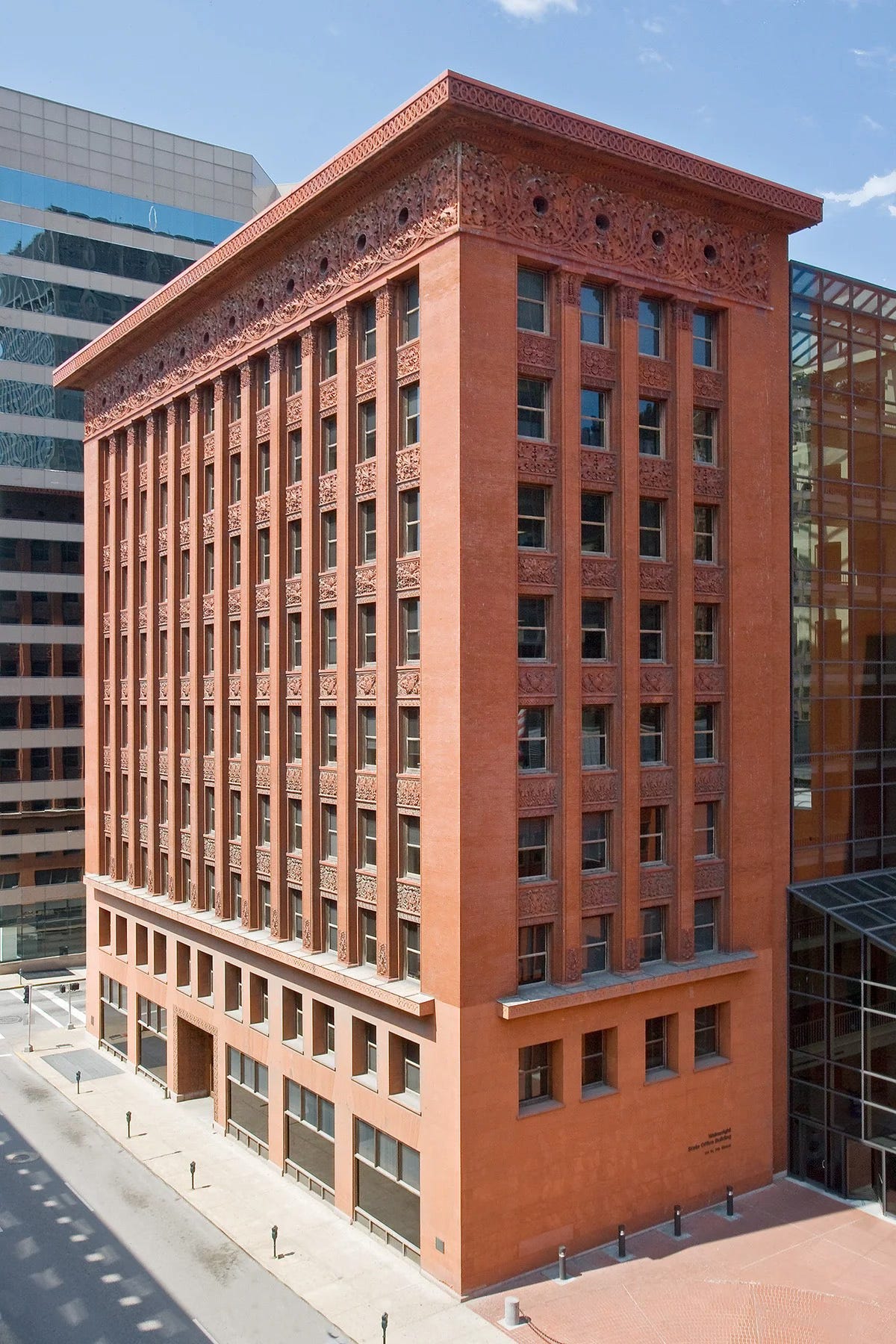
Very different from its contemporary, the Potter building, don’t you think?
This is the first skyscraper to abandon any kind of “order”.
(And “under the hood” we have one of the first steel structures in history!)
In fact, as soon as it was completed, it was considered the first skyscraper that truly looked like a skyscraper! (In short, a modern skyscraper!)
So much so that it earned Louis Sullivan the title of “father of the skyscraper.”
By describing this building, the architect “invented the pendulum,” coining the famous phrase “form ever follows function.”
He uses this expression to explain the three-part division of his building and its facades:
Ground floor: shops.
All intermediate floors: offices (identical to each other).
Top, “technical” floor: machine room (elevator motors).
In short, as the author himself says, it’s pure common sense regarding what’s inside. Why change every 3-4 floors if the things inside are the same?
(But it is today, in 2025, thanks to him; at the time, as we’ve seen, “orders” were applied every 3-4 floors).
In this sense, “form ever follows function.”
If there had been four different things, he would most likely have divided it into four.
Here lies the root of the issue that started our story and that we still carry with us today as a “filter for seeing the world.”
But (plot twist) let’s hear how Sullivan frames the issue in the article where he explains his building:
(Here things become interesting and less certain...)
How shall we impart to this sterile pile, this crude, harsh, brutal agglomeration…
the graciousness of those higher forms of sensibility and culture that rest on the lower and fiercer passions ?
How shall we proclaim from the dizzy height of this strange, weird, modern housetop the peaceful evangel of sentiment, of beauty, the cult of a higher life
Reading these words, a doubt arises in me:
How can a person who speaks like a romantic then become the “father of functionalism” (as we understand it)?
Something doesn’t add up, as if there had been a problem with the “telephone game” over time, right up to the present day.
In fact, a little further on in his writing, he divides the problem into two and calls:
“Practical conditions” those that for us will become “functions“ (modernism).
“True architectural expression”, his emotional expression! (therefore communication → postmodernism, remember?).
Paraphrasing, at a certain point he tells us:
“Well, now that we have logically resolved the practical questions (functions), we must elevate the matter to a true architectural expression (form)!”
So the goal for Sullivan remains his emotional expression, his communication! (Not the “practical questions” to insert inside!)
Whereas, as we have seen, in functionalism, goal and practical questions coincide.
In essence, following this line of thought, from 1925 onwards, we’ve missed a piece along the way.
Coming back to us, this is the theory of:
“What matters is being beautiful on the inside.”
Here’s the game of the «Chinese Whisper» of «function»!
On the other hand, even today in 2025, there are those who say it is divided into three due to the “concept” of Greek columns: base, shaft, and capital.
It feels the “need” for the “intellectual concept,” mistaking the effect for the cause.
In this vision, appearance prevails over what is inside.
This is the vision of “appearance,” welcome to the image society!
(Social profiles and all the issues debated everywhere today).
Here’s the “Chinese Whisper” of “form”!
In short, it’s a communication problem; everyone reads what they want into this phrase, even when the author clearly says the opposite!
I intuit that here, within the same man, coexist the exactness of reason (modernism) and the power of communication (postmodernism).
For the “inventor of the pendulum,” there is no pendulum!
It seems that both sides are right because there is no conflict!
They are two sides, it’s true, but the coin is the same!
Perhaps Sullivan is misunderstood because he often speaks like a “mystic.”
For us, in 2025, children of science, technology, productivity, and rationality, this talk of spirituality seems a bit fluffy!
I think we should try to explain it differently.
But first, to validate this intuition, the Fourth Horseman of the modern movement comes to my aid.
4-From “form follows function” to “form IS function”!
Frank Lloyd Wright, the Fourth Horseman
“Form follows function” is a mere dogma until you realize the higher truth that form and function are one.
-Frank Lloyd Wright, “The natural house”, 1954
Let’s stay in America and meet our fourth horseman of the modern movement.
(Meanwhile, in the background, I’m listening to The Beatles: this historical walk has put me in the mood for old classics.)
Frank Lloyd Wright (1867-1959) is, in fact, the last horseman of our movement.
But he holds a particular role that places him in opposition to the others.
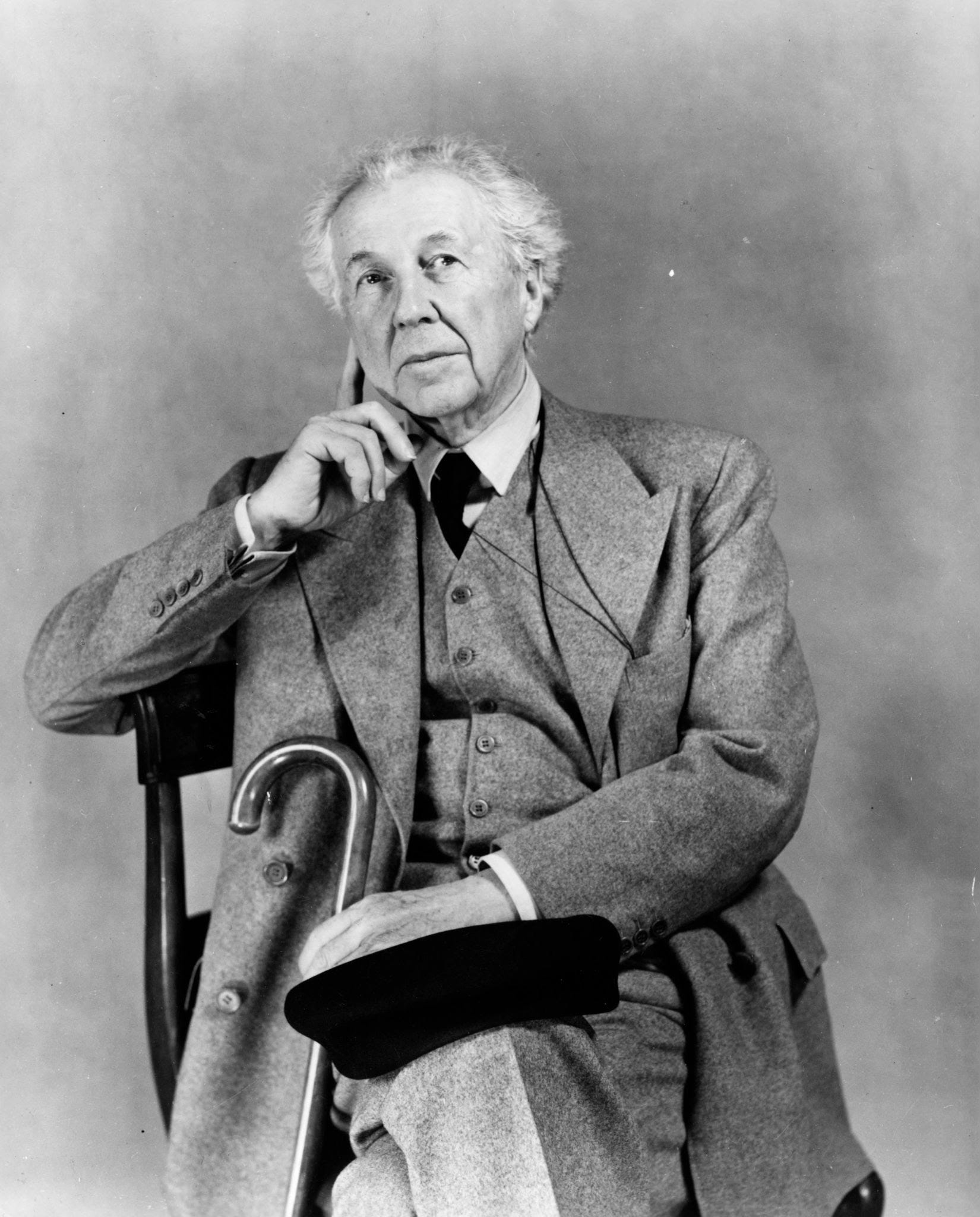
To give you an idea of how distant this horseman is from the other three, I’ve attached a photo of a house around 1925 (do you remember the Bauhaus Exhibition of 1927?)
Curiosity: incidentally, this is precisely the house where he lived, rebuilt for the third time after two fires.

Mr. Wright, in fact:
Is American and not European (proudly American!)
Is a direct student of Sullivan and trained in his studio.
It seems that he himself can help me confirm the intuition I had.
Wright understood his master well and already around 1908, to “correct” the interpretation that was gaining ground, maintained that:
“Form follows function - has been misunderstood. Form and function should be one, united in a spiritual union”
So it seems that our journey together, to break free from the dogma of choice, is on the right track. (If even Wright confirms it, what more could I ask for?!)
But Wright also speaks like a “mystic” for us in 2025!
What exactly does “united in a spiritual union” mean?
That is, in practice and in everyday life, how do we apply this “spiritual union”?
A bit of biology and psychology will give me a more solid basis to solve the question.
Maslow’s Hierarchy of Needs
What a man can be, he must be. This need we call self-actualization.”
-Abraham Maslow
(Meanwhile, on Spotify, I’ve reached The Smiths).
What does biology have to do with spirituality? Let’s say that, in the 19th century, many things we know today about how we are made and which can help us explain why form and function are not opposite were not known.
Bear with me.
Biologically, the brain has two purposes:
The survival of your body and mind. Pure survival instinct. (Yes, even social relationships; just consider that those with strong and secure emotional relationships get sick less and can live longer).
The survival of the species, meaning leading us to reproduction.
(For biology, in short, we are “brains inside bodies” that influence each other).
To do these two “simple” things, the body constantly scans the entire world around us, and the brain makes us feel emotions, moods, inner dialogues...
So even when you’re “doing nothing,” you’re actually doing a lot of things at once!
In particular, mood is how the brain transforms physical sensations into mental sensations. (Although we still don’t know how it does it).
Low dopamine and high cortisol? Welcome, Sadness!

Now, since we are complex creatures, we can imagine all these thoughts, emotions, desires, and relationships as “apps” we have available, but in the end, the basic operating system (our “Windows”) can be traced back to the two points I mentioned.
Once this is understood, let’s proceed because things get interesting.
Abraham Maslow (1908-1970) was an American psychologist known for his attempt to hierarchize human needs.
To do this, he divides them into categories and “stacks” them into a pyramid.
The image says it all.
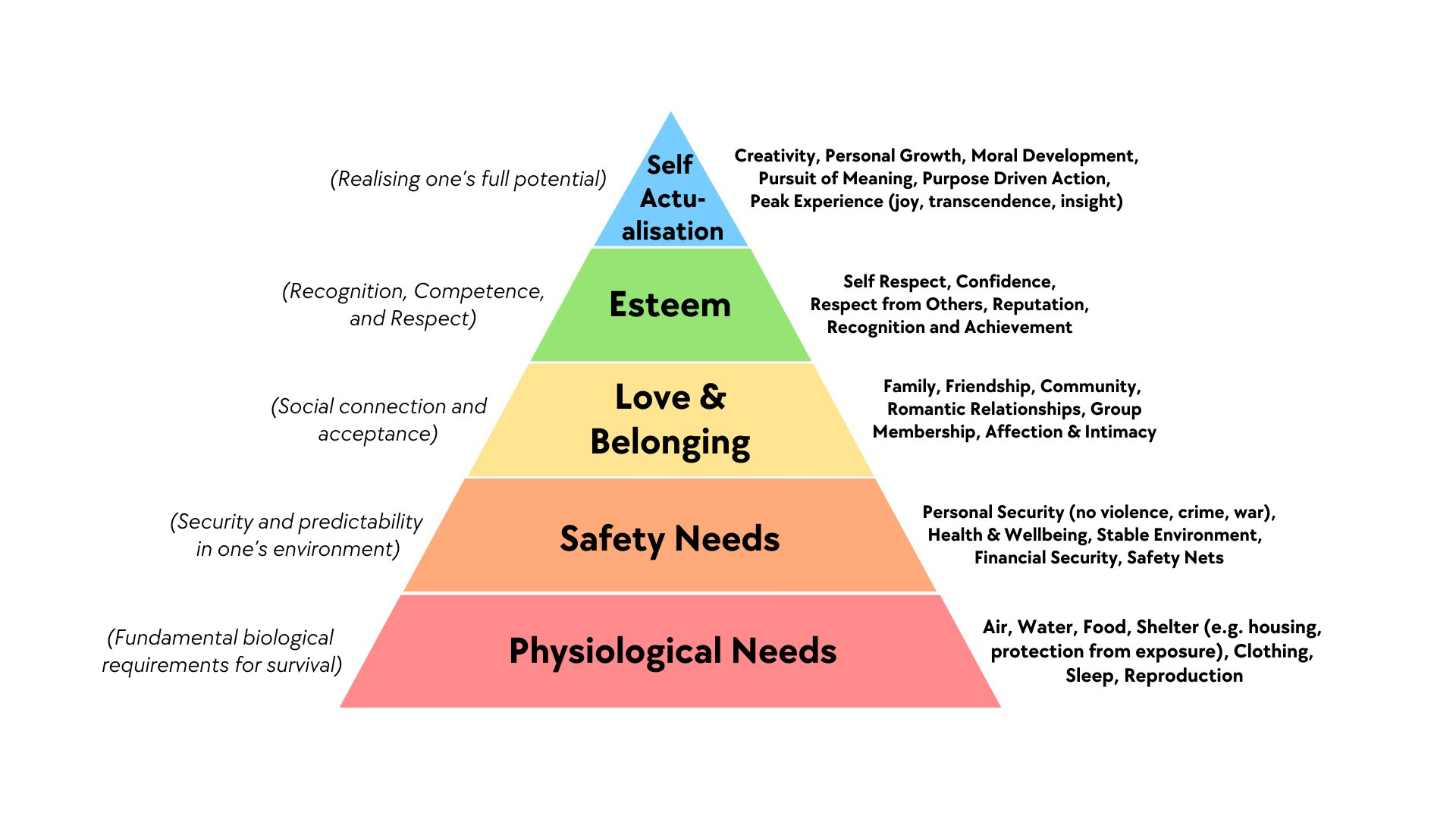
Maslow tells us some important things:
Needs at a higher level cannot be satisfied until lower-level needs have been met.
Once needs at one level are satisfied, subsequent needs may emerge (but it’s not automatic).
Human needs are not limited to bodily functions; they are potentially infinite.
There is a path of “self-realization” to which every human tends.
In short, if I’m starving, I’ll hardly get lost in “philosophizing,” because first I have to eat!
Conversely, if I feel safe enough (e.g., financially), I will be calmer and more relaxed to enjoy family and outings with friends without worries.
(You understand how the pyramid works).
Translated: our brain uses a lot of “apps” to do its job, so we have numerous needs to satisfy.
Does it seem like a waste of energy? True, but the simple fact of being able to count on so many different resources increases our ability to stay alive if the situation changes (we are truly extraordinary creatures).
(Curiosity: to run all these “apps,” the brain alone consumes about 20% of what you eat).
Like any theory, this one also creates discord, given its rigidity.
Sex (physiology) or love (belonging)? Of course, life is complex.
Furthermore, not all people automatically strive for self-actualization; some decide they are fine where they are.
However, viewed with due mental flexibility, it is a good starting model for our reasoning.
Moreover, there’s more: according to Maslow, there is a “level 6,” that of “higher needs” that emerge once the top is reached. (He calls them meta-needs).
In essence, Maslow tells us that once a person is “settled,” they begin to also care about others and general issues.
According to Maslow, these higher needs are innate in human beings.
At this level we find:
Truth and goodness.
Unity and integrity.
Justice and order.
Environmental richness and strength.
Self-sufficiency and the search for meaning (meaning of life, purpose).
The psychologist tells us that when these higher needs are not met, pathologies can emerge (which he calls meta-pathologies):
Cynicism.
Disgust.
Depression.
Alienation.
Emotional apathy.
(Familiar words today, aren’t they?).
«Yes, but Nicholas, how did we go from architecture to personal growth and biology? What does this story have to do with our discussion?»
Kandinsky and the “Form IS Function”
...From the outside, every single drawn or painted form is an element.
From the inside, the element is not that form, but the internal tension that lives within it.
-Wassily Kandinsky, Point and Line to Plane.
Here I am again, sorry, but a cat just jumped onto the windowsill!)
I was saying: what Maslow calls “needs,” in our discussion we can call “functions.” (Does that sound right to you now?)
So: functions = human needs.
This is an important first step because it links functions to ALL human needs, not just physical ones.
As you may have noticed, apart from physiological and safety needs (basic functions), all others (starting even from safety) are psychological and perceptual needs.
And here things are messy, as we’ve seen!
We humans live in our heads, we live by the impressions and emotions we experience, not in “scientific” reality.
In another Letter, perhaps we will talk about the brain’s predictive capabilities, for now, it’s enough to know that we do NOT live in “reality,” but in our heads.
(Walking alone late at night in a deserted place, we feel insecure even if it’s well-lit and there’s no one around. A perfect example of how our brain operates).
“We hallucinate all day. And when we agree, we call it reality.”
Now, if architecture is “the art of expressing life,” that is, the framework that serves as a backdrop and support for life (the “packaging” that contains it), it must manage many of these functions.
It seems evident that physiological and safety issues (practical ones) are well resolved by what we know as “function“ (the bathroom, the bedroom, the reinforced door, the library’s book storage...).
But the functions don’t end there; we’re on the first step!
And who deals with how we perceive the environment and what happens in our heads? Bingo! Form!
Form is equivalent to the words an inanimate object can tell us.
If after a hard day you enter a place that makes you feel protected and cared for, that’s a “pat on the back” that the environment can give you.
It’s like a friend who says: “Rough day, huh? Don’t worry, it’ll pass; meanwhile, look how beautiful the sunset outside is!”
“Not everything that counts can be counted, and not everything that can be counted counts.”
-Albert Einstein
Let me summarize the reasoning so far:
Our brain, subconsciously, constantly scans the environment we are in to look for signs of danger or opportunities to exploit.
To do what it needs to do, it has developed a very complex system of “apps“ that make us feel emotions, moods, thoughts, relationships...
To make all these “apps” work, we have a series of needs.
Since buildings serve as support for life, these our needs, for buildings, are functions they must perform so that we can live better. (Whatever you do, you do it in a physical place that is made in a certain way, so it might as well help you and not hinder you!)
“External function“ deals with the first and second steps, the “practical matters“.
“Internal function“ deals with giving us information about the environment and about the other steps.
From this perspective, the situation changes considerably.
Form is no longer an aesthetic matter, a matter of taste, fashion, or brand communication (Postmodernism), but it becomes a true instrument to be used to support us in achieving our other needs.
Translated:
A super-efficient building (even in terms of energy) that “says nothing” is as dysfunctional and inefficient as an “artistic” one that is uncomfortable and works poorly!
Now, I’d like to try and define these two things clearly so we can speak the same language.
I would call:
“External Function” the satisfaction of physiological and practical needs.
This would include all those functions that concern our body, that is, our “external self.”
Heating systems,
security doors,
drinking water,
the roof against rain,
bathrooms,
...
In short, the “External Function“ is performed by what we previously called “function.”
“Internal Function” the satisfaction of emotional and psychological needs.
This would include all the functions that deal with our mind, our “internal self.” Essentially, all those things that cannot be measured because they are intangible, but which are “real” to us.
The feeling of warmth and welcome,
perceived security,
the connection with water and nature,
the sense of shelter and protection,
the atmosphere of relaxation and calm,
...
The “Internal Function“ is performed by what we previously called “form.”
So now, with this perspective, we need to revise the initial diagram we started from, which I’ll show you again below:
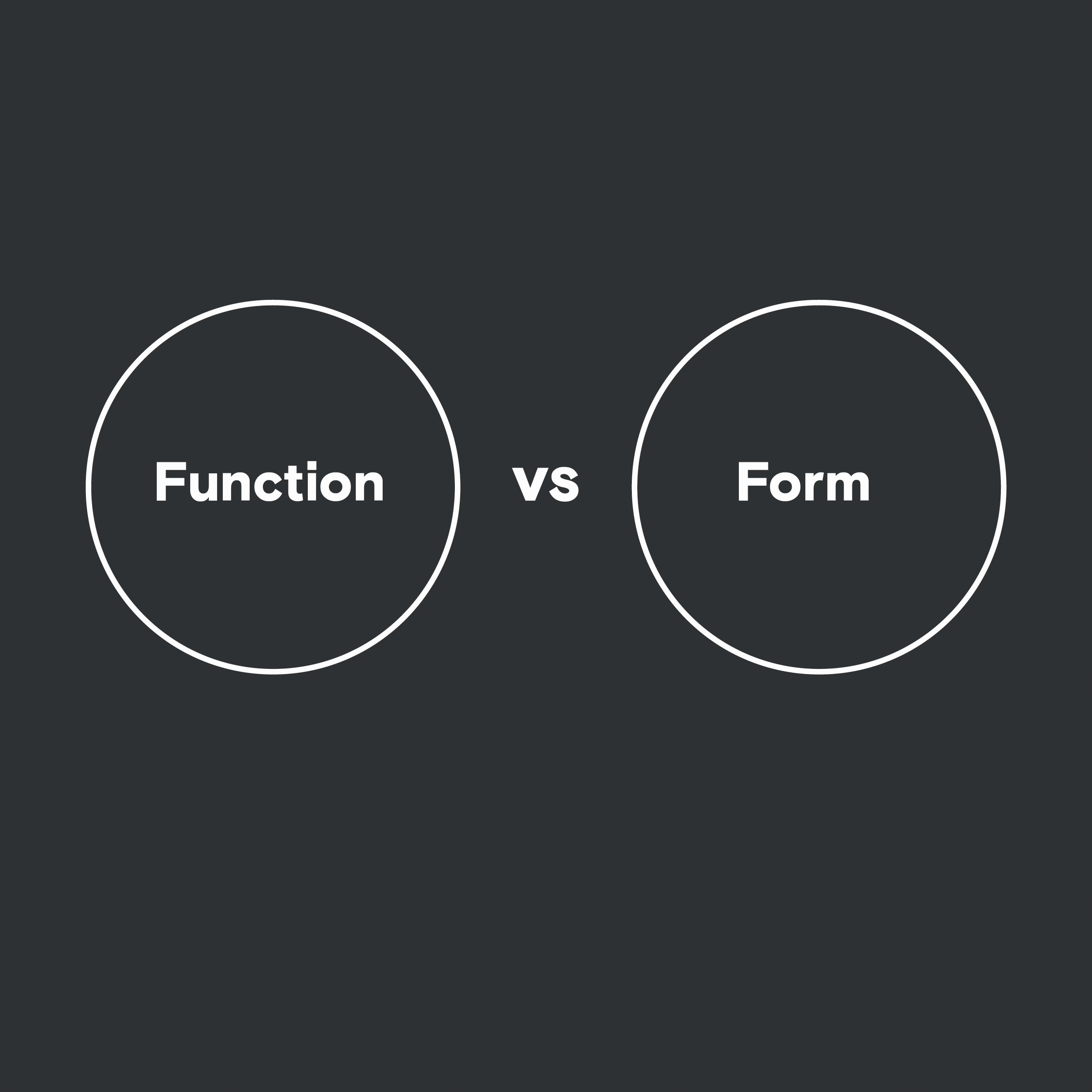
To arrive at a diagram that is more similar to this:
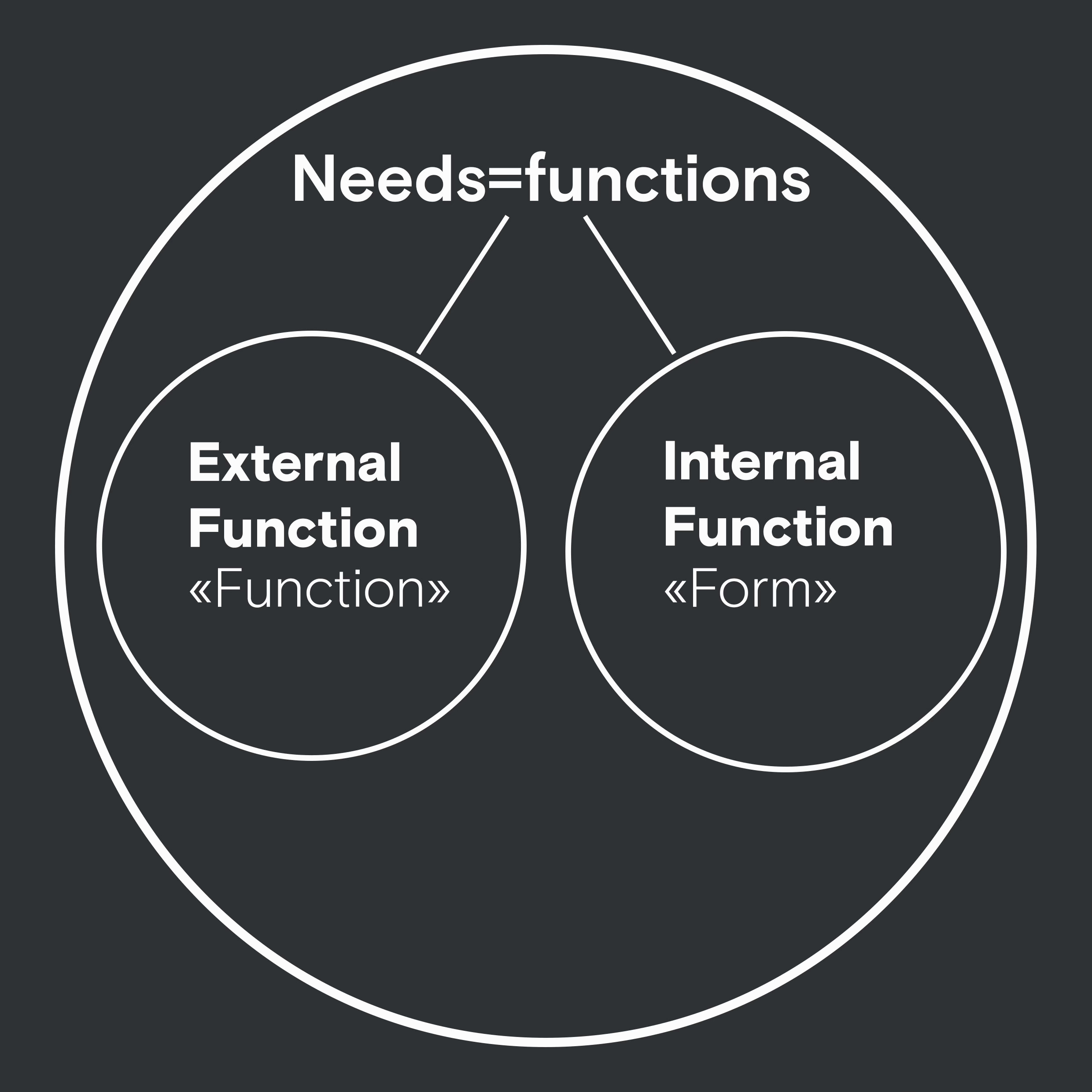
No longer “form AGAINST function,” but two groups of functions to perform.
Two groups of needs to satisfy.
They are not hierarchical, there’s no choice to make, no right or wrong: just different but necessary purposes.
I am saying that the very idea of choosing between the two is, in my opinion, wrong.
I’m saying there is no “external vs internal,” no dualism (to use a Zen/mindfulness term that is used today).
They are different things serving two different purposes, so if you have to choose, choose both! (”The middle way” to stay in the Zen realm).
Simply put, if I focus only on one extreme, I am inefficient and lacking in the other. (Period).
So, we move from “form follows function” to “form IS function.”
Now you might be thinking: “But in practice, how does this apply? (What does it matter to me?)” I’ll show you some examples in everyday life with this new filter.
5- 3 examples
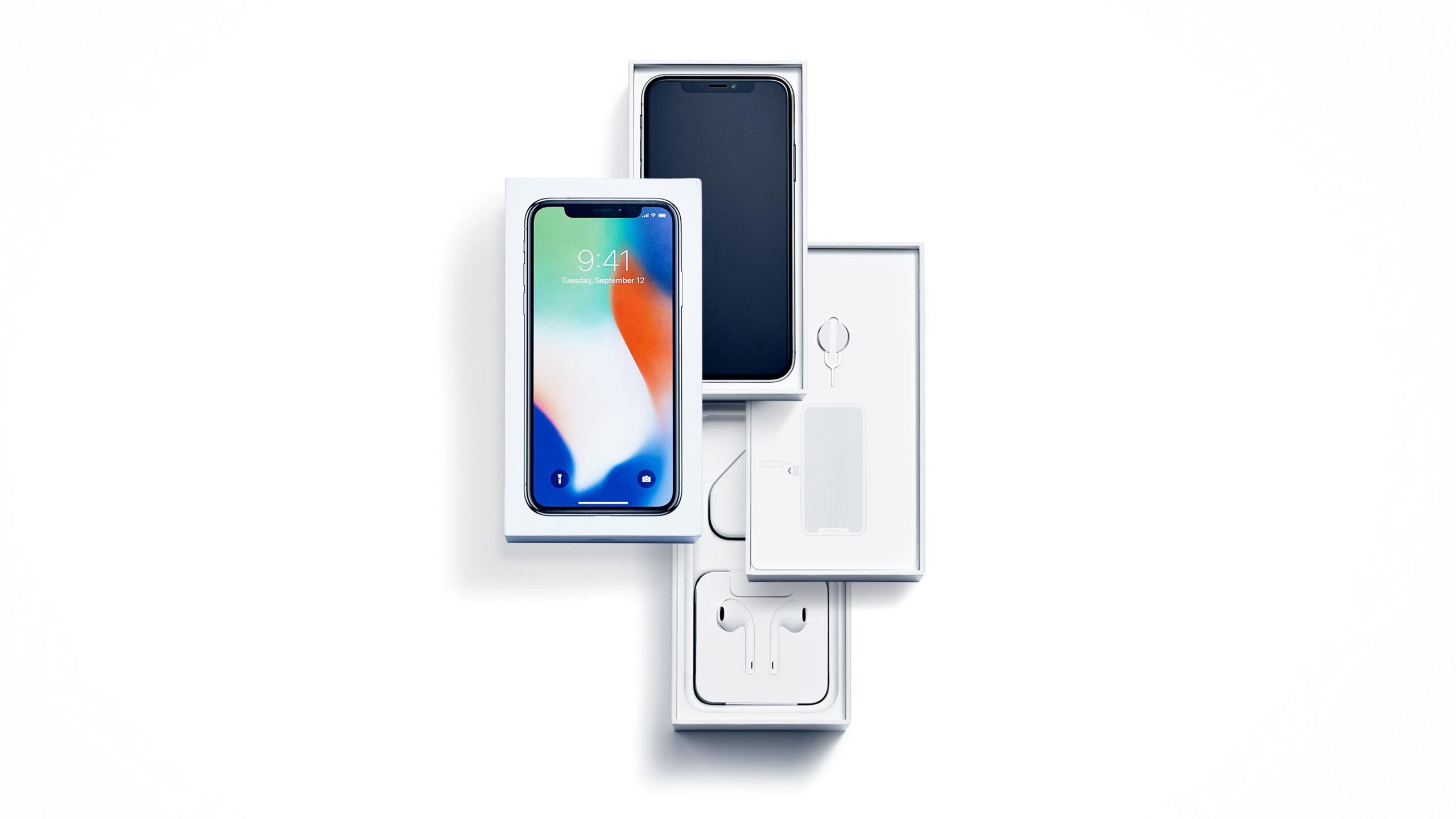
1. Steve Jobs and iPhone packaging
“When you open the box of an iPhone or an iPad, we want the tactile experience to set the tone for the perception of the product.
It was Mike (Markkula) who taught me that.”
-Steve Jobs
Apple applies this concept even to iPhone boxes to make it an experience.
In the end, it’s about packaging a product, so why such care?
(An Amazon-style package would be enough to protect the product).
Steve Jobs understood that packaging speaks to people and that they form an opinion of the product starting from the box.
(If you’ve ever opened an iPhone package, you know what I’m talking about).
Thus, from touch to sight, from the closed box to the unboxing, everything is designed in every detail to make you say: “I bought something amazing!”
He intuited that “clothes MAKE the man” and “you judge a book by its cover”!
2. The flowers around us

Plants also confirm our intuition that form is function.
Flowers are the perfect example.
Flowers possess reproductive organs (external function), which are surrounded by colorful petals designed to attract animals and “communicate” with them (internal function).
This has proven to be such a great evolutionary advantage that, from the birth of the first flower on Earth, today 80% of plants produce flowers and fruits.
The communication works so well that even we humans like flowers!
In nature, not only do “clothes make the man,” but “the choice of clothes” affects survival! (It’s not a “secondary” issue, as we understand it).
3. The letter you are reading
What you’ve read in these two installments is an application of this filter.
I wanted to share these reflections with you (”function”).
The “letter” format between you and me.
The story of the love for ships and knights.
The simple language.
The metaphors of form as language, of the brain with “apps”.
These were formal concerns I had to address the “internal function.”
I didn’t want to bore you; I wanted to make it more pleasant to read, and I wanted you to read it!
The issue, in my opinion, concerns everyone, and I wanted it to be understandable to you too, so you could look at the environment around us with different eyes.
Of course, I could have written a “serious” article, with all the citations and sources I had prepared, and delved deeper into many aspects.
But you would have closed the email after the third line, wouldn’t you? I imagine so; at that point, lacking “form,” I would have also missed the “function.”
Do you see how intertwined they are? How much one depends on the other? I hope so.
That’s all for this Letter.
We have come full circle and answered all the initial questions.
I believe that, in reality, there is no hierarchy and no conflict between “being” and “appearing,” between “form” and “function.”
It’s not bad to be “superficial” because the surface communicates with the outside world.
It’s not bad to be “profound” because that deals with our content.
Two different things for two different purposes, both are needed.
I wish you to be “profoundly superficial” from now on!
I hope I’ve given you some food for thought.
I’ll write to you in two Saturdays with a new topic and my point of view (controversial as always).
I wish you a good weekend,
-Nicholas
P.S. Leave a comment if you want to share your thoughts on the topic.
P.P.S. Subscribe by clicking on the button down here if you are enjoying these Letters.